

Whatever the https://noithatnarihouse.com/what-are-adjusting-journal-entries/ actual cash value is at any given time is its book or market value. For Ivy Siltala of the Phoenix, Arizona, metro area, it took State Farm 10 weeks to total her 2023 Toyota Corolla XSE and cut her a check for an accident that was not her fault. During that time, she took the bus to and from work after coverage for a rental car ran out.
Salvage Value and Its Friends: Depreciable Assets
Salvage value impacts everything from daily accounting to big purchasing decisions. It affects how much depreciation you can claim each year and your company’s profit. You can find the asset’s original price if the salvage price and the depreciation rate are known to you with the salvage calculator. The car salvage value calculator is going to find the salvage value of the car on the basis of the yearly depreciation value.
How to Calculate Salvage Value
If you’re allowed to keep the car, you won’t be able to drive it right away. “Once a car is deemed a total loss, it has to be repaired, pass inspection, and ultimately you’ll be given a rebuilt or a salvaged title for the vehicle,” Damico said. You’ll need to provide the title and proof of inspection to the DMV to register the car so you can drive it on the road.
BUY VEHICLES DIRECTLY FROM BANKS NOW
If you have $20,000 in depreciation expense, your taxable income is only $80,000. Think of depreciation as your business’s financial superhero, swooping in to save the day (and your tax bill). Sometimes, when you sell an asset for more than its original cost, part of the gain might be taxed as ordinary income rather than a capital gain. This is called depreciation recapture, and it’s the taxman’s way of saying, “Hey, you Retained Earnings on Balance Sheet deducted all that depreciation over the years, now we want a piece of the action! ” This is a more complex area, so it’s best to consult with a tax professional for the specifics.

The carrying value is what the item is worth on the books as it’s losing value. Understanding after tax salvage value is a crucial component in determining the overall profitability of an investment or asset. It helps businesses and individuals estimate the net cash flow they will receive when disposing of an asset after taking into account the applicable tax consequences. In this article, we’ll walk you through the process of calculating the after tax salvage value. Before the final ATSV calculation can occur, the asset’s Book Value (BV) at the time of sale must be precisely determined. Book Value is calculated by taking the asset’s original cost and subtracting the total accumulated depreciation recorded through the date of disposal.

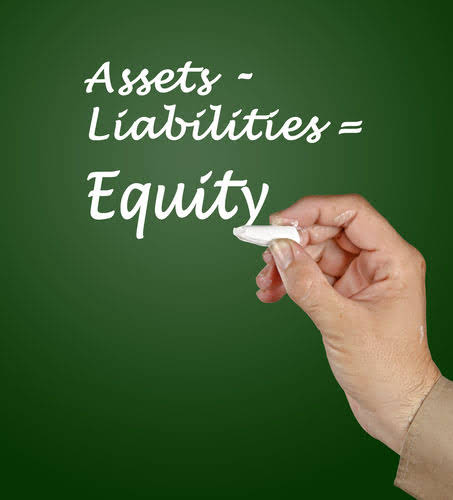
Think of the balance sheet as a snapshot of a company’s financial health at a specific moment. It lists everything a company owns (assets), everything it owes (liabilities), and the owner’s stake in the company (equity). An asset’s book value (original cost minus accumulated depreciation) is what shows up on the balance sheet. Since salvage value helps determine the amount of depreciation taken each year, it indirectly influences that book value. This is often heavily negotiated because, in industries like manufacturing, the provenance of their assets comprise a major part of their company’s top-line worth. Depreciation measures an asset’s gradual loss of value over its useful life, measuring how much of the asset’s initial value has eroded over time.
Step 1: Calculate Annual Depreciation
Depreciation is recorded in the income statement, while the cost of the asset is recorded on the company’s balance sheet. Understanding salvage value is essential in accurately calculating depreciation and ensuring compliance with tax regulations. For example, if an asset has an original cost of $10,000 and a salvage value of $2,000, the total depreciation would be $8,000. This is calculated by subtracting the salvage value from the original cost. The IRS allows businesses to use the Accelerated Cost Recovery System (ACRS) or Modified Accelerated Cost Recovery System (MACRS) methods to determine the amount to be depreciated. For example, if you have an asset with a basis cost of INR 800,000 and an accumulated depreciation of INR 450,000, the salvage value would be INR 350,000.
- Keeping good records is vital for audits and accurate financial reports.
- Over six years, total depreciation equals $37,500, with the remaining $7,500 representing the projected salvage value.
- Get instant access to video lessons taught by experienced investment bankers.
- The salvage value is the estimated residual value of the asset at the end of its useful life.
- It represents the amount a company expects to receive when selling or disposing of the asset after it’s fully depreciated or no longer useful.
- The sausage system will save the firm $148,000 per year in pretax operating costs, and the system requires an initial investment in net working capital of $29,500.
Salvage value, also known as residual value or scrap value, is a fundamental concept in accounting and asset management. It refers to the estimated value that an asset will have at the end of its useful life. Understanding how to accurately calculate salvage value is essential for businesses to manage their assets effectively. In order to find an asset’s residual value, you must also deduct the estimated costs of disposing the asset. If you earn capital gains on the disposal of an asset, you’ll typically be required to pay tax on that amount.
Hence, a car with even a couple of miles driven on it tends to lose a significant percentage of its initial value the moment it becomes a “used” car. Under straight-line depreciation, the asset’s value is reduced in equal increments per year until reaching a residual value of zero by the end of its useful life. The carrying value of the asset is then reduced by depreciation each year during the useful life assumption. A depreciation schedule helps you with mapping out monthly or yearly depreciation. You’ll be responsible for making up the difference unless you have guaranteed asset protection (GAP) coverage.
Banks Want to Move Repossessed Vehicles Quickly
The fraud was perpetrated in an attempt to meet predetermined earnings targets. In 1998, the company restated its earnings by $1.7 billion – the largest restatement in history. In a motor accident scenario, the insurance company decides whether to write off a damaged car or pay after tax salvage value for the salvage value. This shows that salvage value is used to determine the value of a good.